

2026-07-23 Author:Ofiexperts
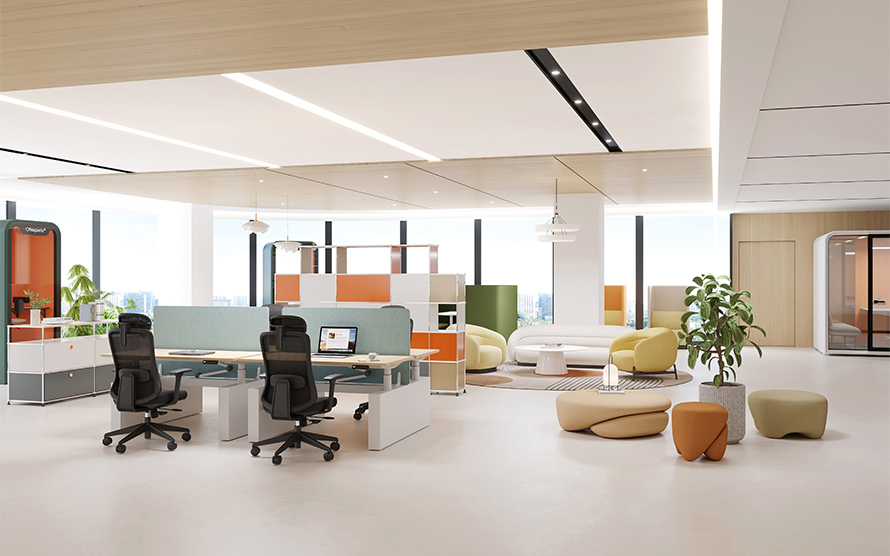
In the contemporary workplace, operational efficiency is rarely derailed by sudden, catastrophic failures. Instead, organizations suffer from a quiet, cumulative erosion of productivity known as friction. Workplace friction manifests in subtle ways: micro-adjustments to uncomfortable seating, cognitive fatigue driven by cluttered spatial layouts, and physical discomfort that gradually degrades focus. While often overlooked, the physical workspace—specifically its furniture—serves as the primary touchpoint of human-office interaction. High-performance ergonomic furniture does not merely solve existing discomfort; it acts as an invisible system engineered to reduce friction long before performance bottlenecks or health issues emerge.
The Hidden Cost of Ergonomic Strain
At its core, ergonomic friction is a physiological tax on human potential. When an employee sits in an ill-fitted chair or works at a desk set to an improper height, the body continuously engages static muscle loads to maintain posture. According to research published by the Occupational Safety and Health Administration (OSHA), work-related musculoskeletal disorders (MSDs) account for over 33% of all worker injury and illness cases, costing U.S. businesses between $45 billion and $54 billion annually in direct and indirect costs.
However, the primary loss is not the acute claim, but the chronic state of presenteeism—being physically present at work but functionally impaired by discomfort. A landmark study from the Journal of the American Medical Association (JAMA) estimated that lost productive time from common pain conditions costs U.S. employers over $61 billion annually, with 76.6% of that loss attributed to reduced performance while on the job, rather than absenteeism. High-grade ergonomic furniture mitigates this by providing precise spinal support, encouraging dynamic movement, and maintaining optimal joint angles, thereby eliminating physical strain before it translates into cognitive distraction.
Spatial Flow and Cognitive Friction
Beyond physical ergonomics, furniture dictating spatial design plays a vital role in reducing cognitive and collaborative friction. A poorly configured office layout forces unnecessary physical navigation, increases ambient acoustic interference, and disrupts deep-focus work.
Modern office furniture ecosystem—incorporating acoustic pods, modular partitioning, and height-adjustable workstations—creates distinct micro-environments tailored to diverse work modes. Research from the Gensler Workplace Survey consistently demonstrates that workers who have access to adaptable, high-functioning workspaces report significantly higher rates of innovation and job satisfaction. By seamlessly accommodating transitions between individual focus and spontaneous collaboration, well-designed furniture eliminates the organizational friction of finding a suitable place to work, enabling uninterrupted workflow states.
Proactive Ergonomics: The Preventive Investment
The strategic value of commercial-grade office furniture lies in its proactive nature. Waiting for employees to complain of back strain or eye fatigue is a reactive posture that incurs lost productivity long before a formal issue is raised.
-Micro-Adjustability: Precision-engineered seating with intuitive lumbar mechanisms, adjustable armrests, and dynamic tension control allows instantaneous customization, accommodating diverse body metrics without user hesitation.
-Active Working Solutions: Sit-stand desks mitigate the metabolic risks of prolonged sedentary behavior, improving vascular circulation and alertness throughout the workday.
-Acoustic and Visual Management: Integrated spatial elements absorb sound and manage visual clutter, guarding cognitive bandwidth against environmental overload.
Investing in premium office furniture is not an aesthetic indulgence; it is a fundamental strategic decision to optimize human capital. By removing daily physical and environmental impediments, good furniture functions as a silent facilitator of high performance. When a workspace is designed to eliminate friction proactively, employees spend less energy accommodating their environment and more energy driving organizational value. Good furniture solves problems before they ever appear on a balance sheet.

