

2026-09-21 Author:Ofiexperts
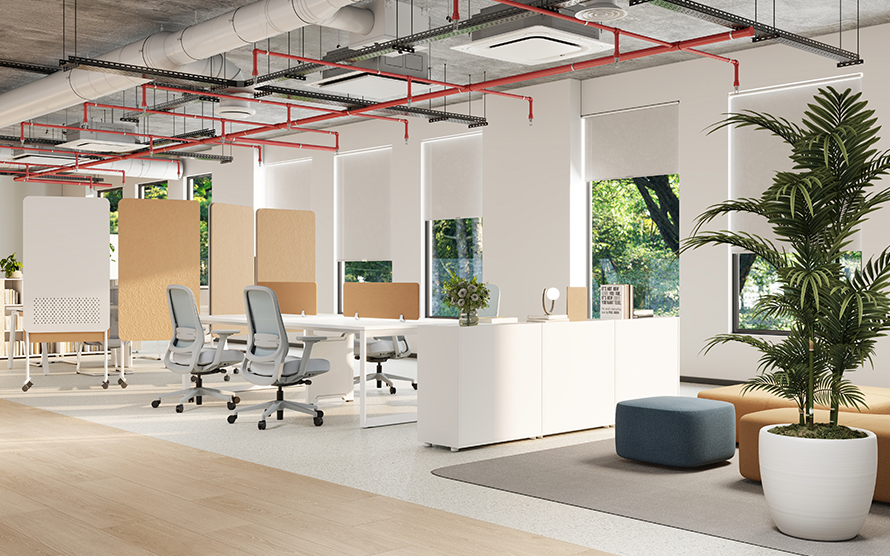
The modern office is no longer designed around a simple assumption: one employee, one desk, five days a week. Hybrid work, changing team structures, and different types of daily tasks have made that model increasingly difficult to justify. Instead, flexibility is becoming a core principle of workplace design.
This shift is supported by real workplace data. Gallup found that among U.S. employees whose jobs can be performed remotely, only 20% were fully office-based in 2023, compared with 60% in 2019. Meanwhile, half were working in a hybrid arrangement.
The implication for office design is straightforward: workspaces need to adapt to people, rather than forcing people to adapt to fixed spaces.
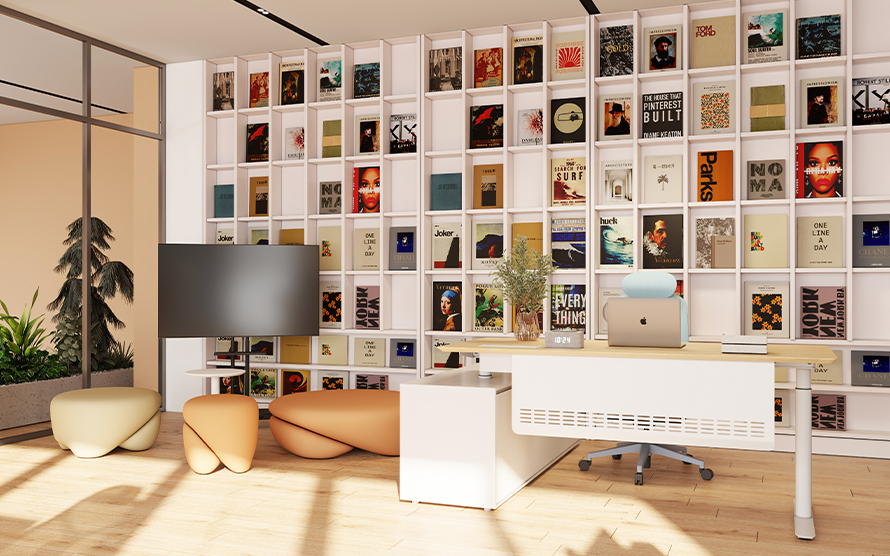
Traditional offices were built around permanent workstations. Employees had their own desks, storage, and fixed locations. But when teams are only partially in the office, this can leave a significant amount of space unused.
CBRE’s 2026 Global Workplace & Occupancy Benchmarking data shows that the average global office utilization rate reached 53%, compared with 38% in 2024. At the same time, 69% of organizations reported that more than 40% of their employees share desks.
This creates an opportunity to rethink the workplace. Height-adjustable desks, mobile tables, modular workstations, and shared desks can allow the same floor area to support different users throughout the week.
Flexibility is not simply about reducing the number of desks. Different tasks require different environments.
An employee may need a quiet area for focused work in the morning, a meeting room for collaboration after lunch, and an informal lounge for a discussion later in the day.
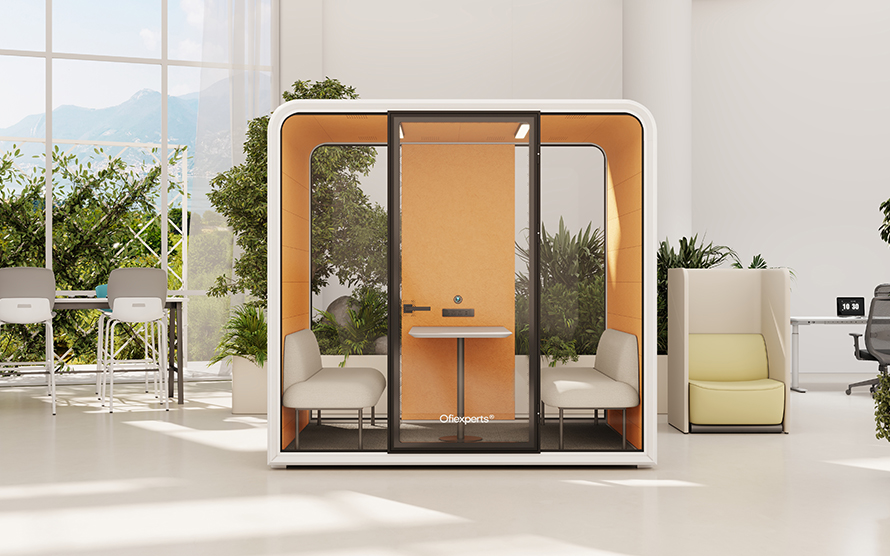
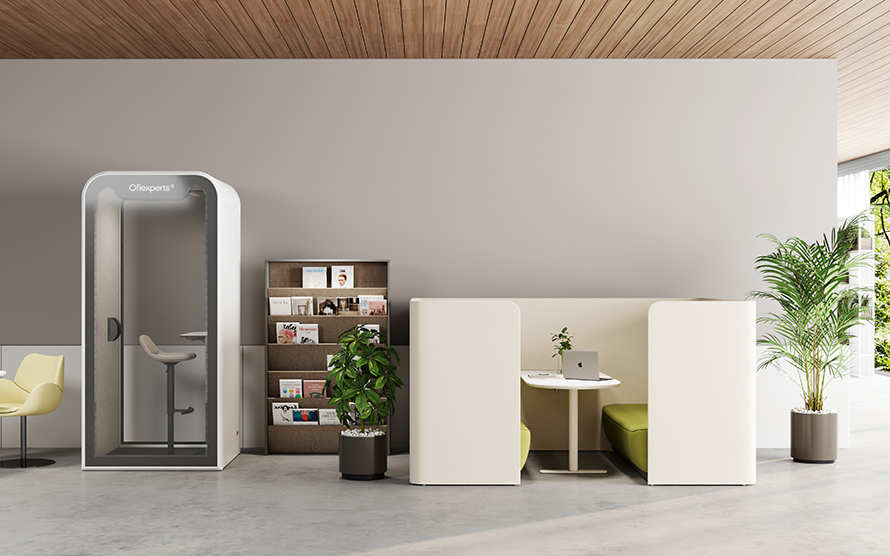
This is why modern offices increasingly combine individual workstations with meeting areas, lounge seating, phone booths, collaborative tables, and acoustic spaces. CBRE notes that hybrid work requires a wider variety of space types to support focus as well as virtual and in-person collaboration.
Furniture plays an important role in making these spaces adaptable. Lightweight tables can be moved when teams grow or shrink. Modular seating can create different layouts. Acoustic pods can provide privacy without building permanent rooms. Height-adjustable desks can support different working postures while encouraging movement throughout the day.
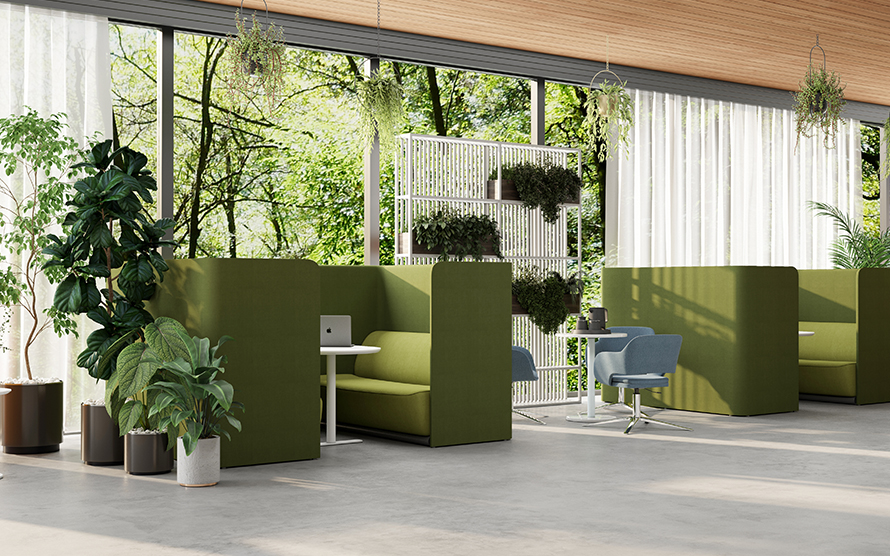
The goal is not necessarily to create a larger office. It is to make the existing space work harder.
CBRE’s 2026 research found that 81% of corporate real estate teams consider increasing office utilization a top goal. It also found that 87% of organizations now set explicit targets for building utilization.
This suggests a broader change in thinking: office design is increasingly being measured by how effectively space is used, rather than simply how many desks can fit into a floor plan.
A flexible office can therefore support business efficiency while creating a more varied employee experience.
The biggest advantage of flexibility may be future-proofing.
Companies change. Teams expand, reorganize, work remotely, return to the office, or adopt new technologies. A fixed office can quickly become outdated when these changes happen.
A flexible workplace, by contrast, can be adjusted without completely rebuilding the space. Modular furniture, movable partitions, shared workstations, adaptable meeting areas, and multifunctional spaces give companies more options as their needs evolve.
The office of the future does not need to predict exactly how people will work five years from now. It needs to be capable of changing when they do.
Flexibility, therefore, is no longer just a workplace trend. It is becoming a practical design standard. The most effective offices are moving away from rigid layouts and toward environments that can support different people, tasks, schedules, and business needs.
In this new model, the office is not a collection of fixed desks. It is a flexible system designed to evolve with the people who use it.

