

2026-09-24 Author:Ofiexperts
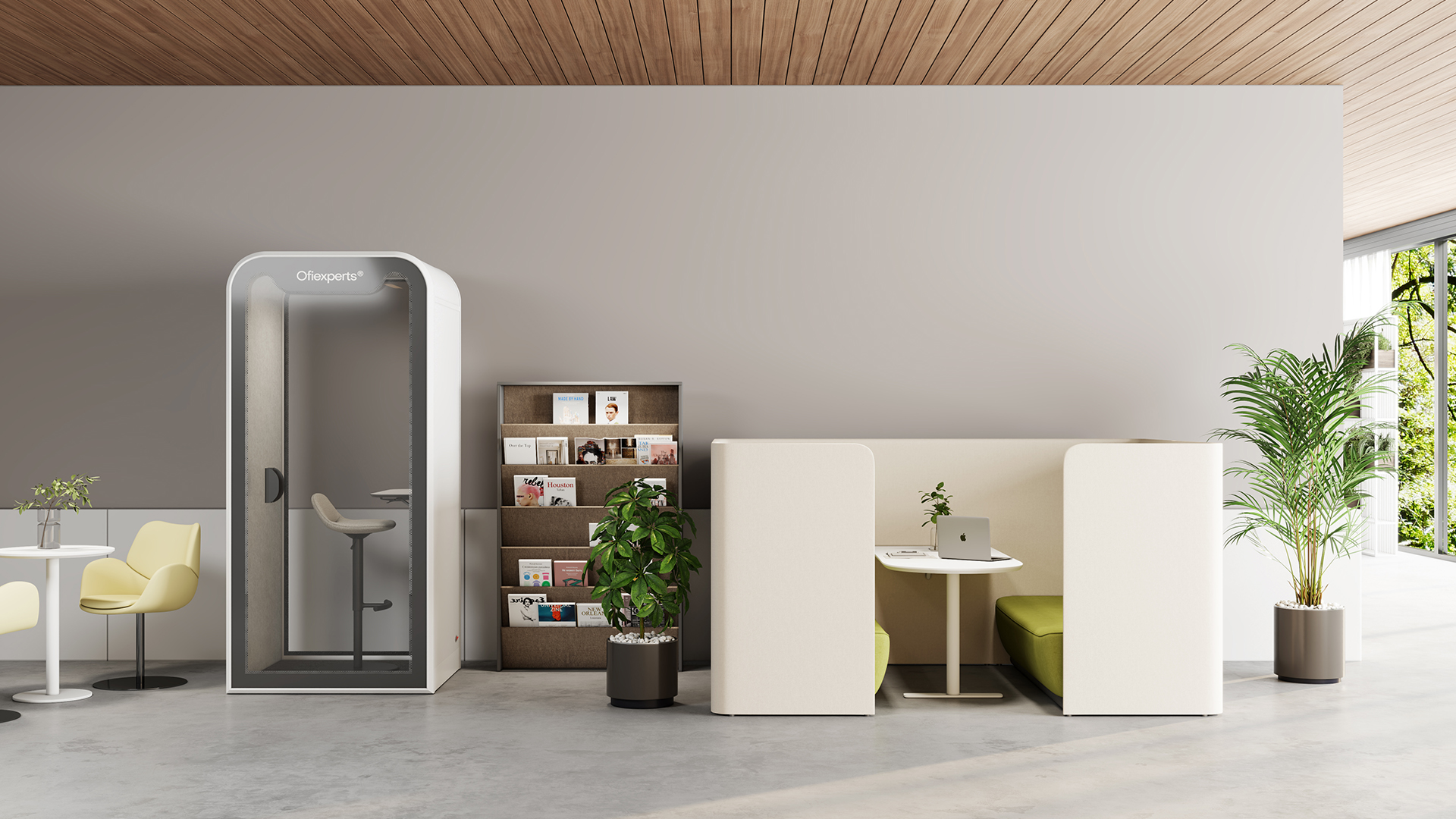
Work is changing faster than the spaces designed to support it.
Teams grow, shrink, reorganize and collaborate across locations. A project team may need an open collaboration area today, several private meeting spaces tomorrow, and more individual workstations a few months later. In this environment, an office designed around a fixed layout can quickly become a limitation.
The future of workplace design is therefore not simply about creating more space. It is about creating space that can change.
Hybrid work has become a lasting part of the workplace landscape. As of May 2026, 52% of U.S. employees in remote-capable jobs work in a hybrid arrangement, while 61% said in late 2025 that hybrid was their preferred working model. This means office occupancy is no longer as predictable as it once was. The number of people using a workplace, the activities they perform and the type of space they need can vary significantly from day to day.
That has a direct impact on office design.
Adaptable workplaces rely on furniture that can support more than one working style. Height-adjustable desks allow employees to alternate between sitting and standing, while mobile desks, lightweight chairs and movable partitions make it easier to reconfigure an area without a major renovation.
Meeting spaces can also serve multiple purposes. A room used for team meetings in the morning can become a training area in the afternoon, while lounge furniture can support informal discussions, individual work or short breaks.
The goal is simple: one space should be capable of supporting different activities without requiring a complete redesign.
Flexibility is not only about moving furniture. It is also about giving employees choices.
Among 16,000 office workers across 15 countries, found that 94% of employees in exceptional workplaces have a choice in where they work within the office.
This suggests that effective workplaces are not built around one universal workstation. Instead, they provide a mix of environments for concentration, collaboration, meetings, learning and social interaction.
Quiet zones, shared workstations, project tables, private booths and informal seating can work together as a connected system. Employees can select the environment that best fits the task rather than adapting every task to the same environment.
A truly adaptable workplace should be easy to operate and economical to change.
This is becoming increasingly important as companies examine how efficiently their real estate is being used. In 2025 that portfolio optimization had become the top objective for corporate real estate leaders, with 73% of respondents identifying it as a priority.
This does not necessarily mean simply fitting more people into less space. It means making better use of the space already available.
Modular furniture, movable elements, integrated power solutions and multifunctional areas can help companies adjust their workplaces as teams and working patterns evolve.
The most adaptable workplace is not one that predicts exactly how people will work five years from now. It is one that can respond when those patterns change.
A growing team should be able to add workstations. A project team should be able to create a collaboration zone. Employees should be able to move between focused work and teamwork without leaving the office.
The workplace of the future is therefore less about a fixed floor plan and more about a flexible framework.
When teams change, their workspace should not hold them back.
It should change with them.

