

2026-08-07 Author:Ofiexperts
When executive teams discuss workplace culture, the conversation usually centers on core values, leadership styles, communication channels, and hybrid work policies. Yet culture is not merely defined by what is written in employee handbooks; it is continuously experienced through the physical environment where people spend a third of their lives. Office furniture acts as the invisible layer of workplace culture—an unspoken, persistent architecture that dictates how employees interact, focus, feel, and identify with their organization.
Spatial Agency and the Architecture of Trust
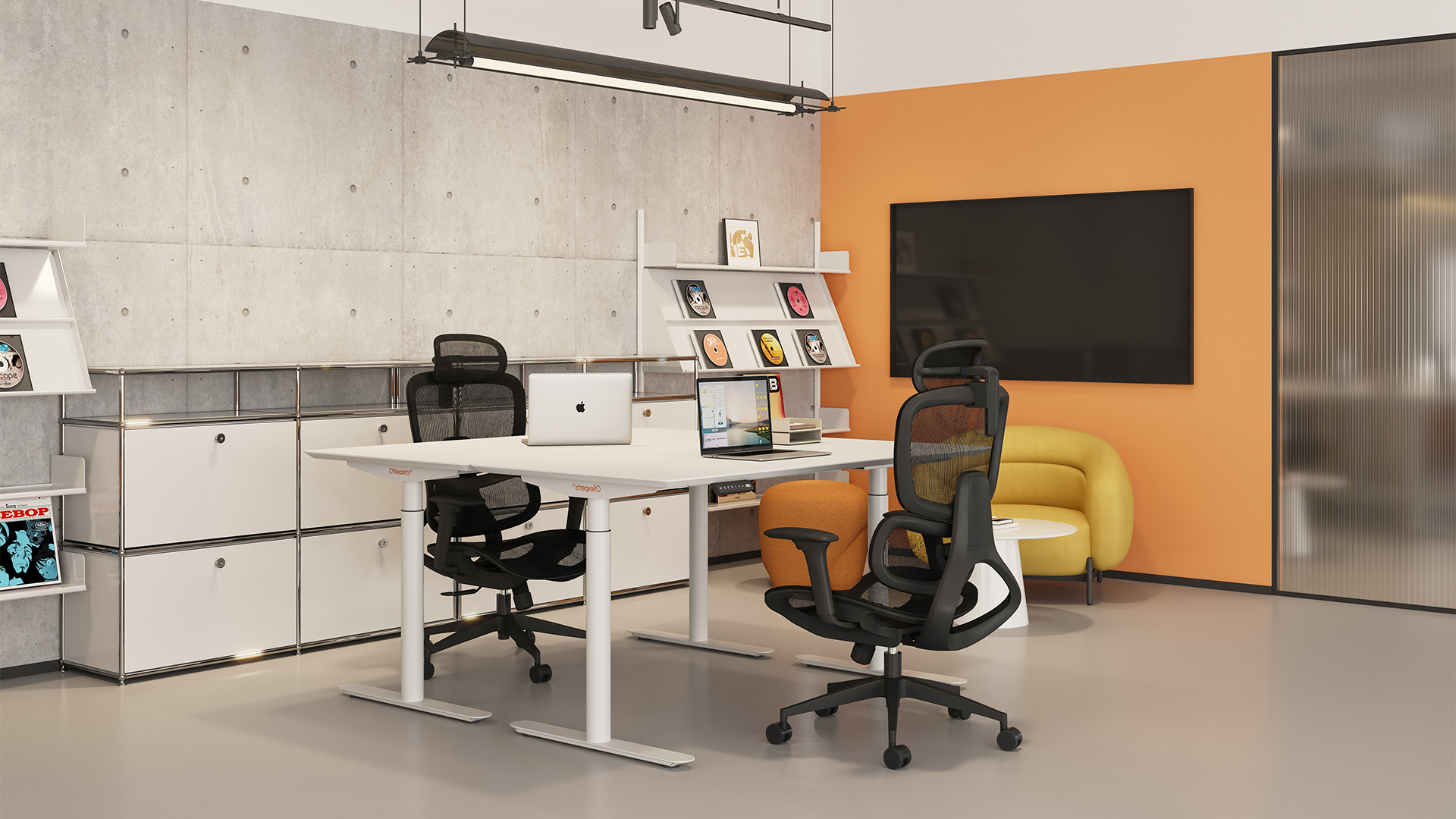
The flexibility and adaptability of office furniture directly reflect an organization’s level of trust in its workforce. Fixed, uniform rows of cubicles signal compliance and rigid hierarchy, whereas modular, easily reconfigurable ecosystems communicate adaptability and personal empowerment.
According to data from Gensler’s Global Workplace Survey, employees who operate in spaces offering high levels of spatial variety and personal choice report higher job satisfaction, greater innovation, and stronger organizational commitment. By integrating height-adjustable desks, acoustic focus pods, and relaxed lounge seating, a company implicitly sends a powerful cultural message: we trust your judgment to select the environment where you do your best work.
Flattening Hierarchy through Physical Collision
Furniture is the physical manifestation of organizational structure. Historically, heavy mahogany executive desks behind closed doors reinforced distance, authority, and top-down management. Modern workplace strategy leverages spatial design to flatten silos and cultivate egalitarianism.
In research highlighted by the Harvard Business Review, physical proximity and the strategic placement of communal furniture—such as high-top coffee bars and soft-seating clusters—increase “serendipitous collisions” between cross-functional teams by up to 30%. These spontaneous interactions generate cross-departmental trust and idea sharing far more effectively than structured agendas or virtual meetings ever can.
Ergonomics as a Signal of Psychological Value
Beyond social dynamics, the tangible quality and ergonomic support of physical assets carry deep psychological weight. When an organization invests in high-performance ergonomic seating, active workstations, and acoustically insulated quiet zones, it communicates that employee physical well-being is a core business priority rather than a cost to be minimized.
The Leesman Index, which benchmarks workplace effectiveness across hundreds of thousands of global workers, consistently shows a direct correlation between physical comfort, individual productivity, and overall pride in the workplace. Conversely, neglected, uncomfortable, or broken furniture generates constant subtle friction, sending an implicit message that daily comfort is an afterthought.
Designing a Lived Culture
Culture is built not just in quarterly town halls, but in every posture assumed throughout the workday—whether leaning into a collaborative whiteboard session or sitting upright at a dedicated focus station. As companies continue to refine the role of the physical office in a hybrid world, space must justify its existence by delivering rich, human-centered experiences. Treating furniture not as static capital equipment, but as an active driver of workplace culture enables leaders to build environments where company values are not merely preached, but physically lived every day.

