

2026-10-28 Author:Ofiexperts
Office procurement is often evaluated through price, specifications, delivery schedules and warranty terms. These factors are important, but they do not tell the whole story. Every chair, desk, acoustic pod and meeting table becomes part of an employee’s daily working environment. Procurement decisions therefore influence not only what an organization owns, but also how people feel, focus, collaborate and perform.
Ergonomics Begins with the Purchasing Decision
Workplace comfort starts with the fundamentals. A chair that provides appropriate support and adjustability, combined with a properly designed work surface, helps employees maintain more comfortable working positions. The U.S. Occupational Safety and Health Administration (OSHA) recommends selecting and arranging workstation components to support neutral postures and reduce awkward movements.
When ergonomics is overlooked during procurement, employees may spend hours compensating for unsuitable furniture. The effects can be subtle, from repeated adjustments and discomfort to difficulty maintaining a productive working posture. Over time, these small inconveniences can shape an employee’s overall perception of the workplace.
Different Tasks Require Different Environments
Daily work involves more than sitting at a desk. Employees switch between focused individual tasks, video calls, informal discussions, collaborative meetings and periods of rest. A workspace designed around only one activity may struggle to accommodate these changing needs.
According to Steelcase Global Employee Research published in December 2025, employees with access to at least three types of spaces supporting different work activities reported 14% higher engagement, 16% stronger community and 13% improved wellbeing. These findings indicate an association rather than proof that space variety alone causes better outcomes, but they highlight the importance of giving employees appropriate choices.
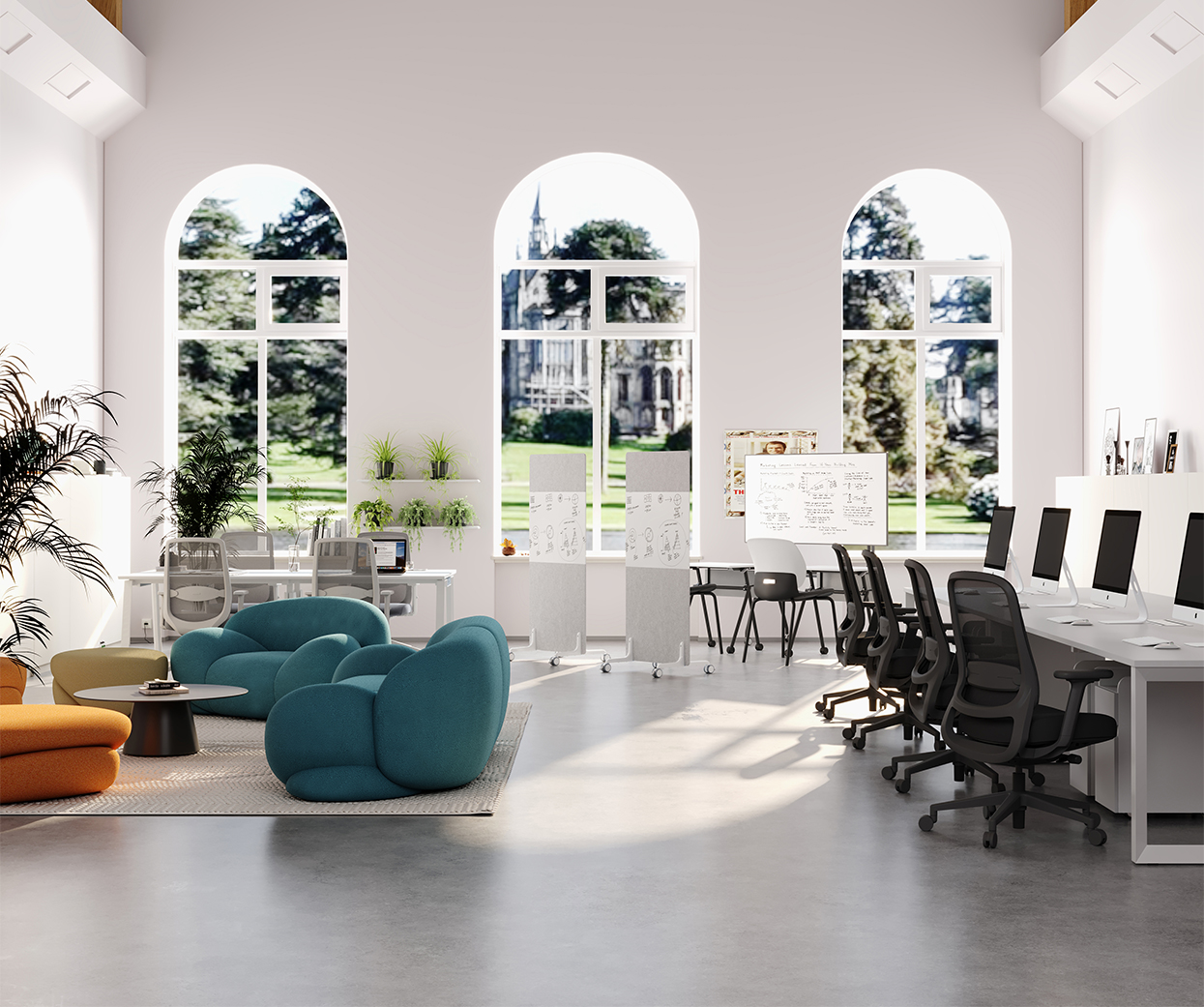
Procurement teams can translate this insight into practical decisions. Ergonomic workstations support individual productivity, acoustic solutions provide privacy for calls and concentrated work, while flexible meeting areas encourage communication. The objective is not simply to purchase more products, but to select the right mix of solutions for actual working patterns.
Beyond Initial Cost: The Value of Long-Term Performance
The lowest purchase price does not necessarily represent the lowest total cost. Furniture that requires frequent repairs, replacement or maintenance can create expenses beyond the original budget. Poor product selection may also lead to employee complaints, operational disruption and additional procurement work.
A more comprehensive evaluation considers durability, warranty coverage, maintenance requirements, replacement parts and adaptability. Standardized products can simplify large-scale purchasing and maintenance, while carefully selected customization helps accommodate specific project requirements.
Sustainability should also form part of this assessment. Durable construction, repairability and responsible material selection can extend product life and reduce unnecessary replacement, supporting both environmental objectives and long-term budget control.
Procurement as a Strategic Business Decision
Effective procurement begins with understanding people and how they work. Organizations should assess daily activities, gather employee feedback, evaluate product performance and compare lifecycle costs before finalizing specifications. Post-occupancy reviews can then reveal whether the selected solutions are delivering the intended results.
Ultimately, procurement decisions continue to influence the workplace long after the purchase order is approved. A well-chosen chair, a thoughtfully planned collaborative area or an effective acoustic solution may appear to be a small investment individually. Together, however, they help create a workspace that supports comfort, productivity and meaningful interaction.
The real value of office procurement is not measured only by what an organization buys, but by how effectively those choices support the people who use the space every day.

