

2026-07-31 Author:Ofiexperts
For decades, workplace design swung between two extreme ends of a spectrum. The rigid cubicle farms of the late 20th century prioritized individual privacy at the cost of human connection, breeding silos and spatial alienation. The open-plan revolution that followed attempted to tear down those walls in the name of collaboration, yet it inadvertently created hyper-exposed, chaotic environments where deep, uninterrupted thought became nearly impossible. Today, as organizations reimagine the role of the physical workplace, a central challenge has emerged: how to design for focus without isolation.
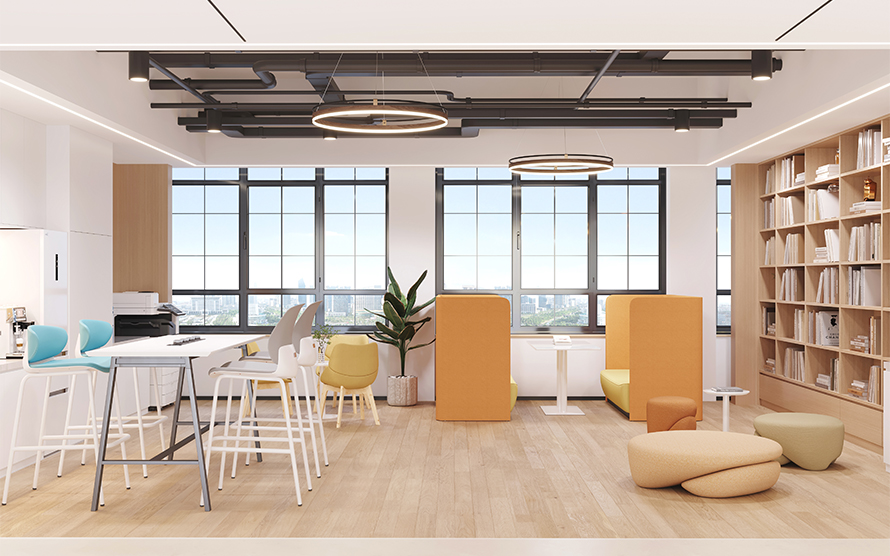
The assumption that offices exist purely for collaborative buzz is contradicted by real-world data. Research from the Gensler Research Institute reveals that individual focus work remains the single largest component of the average workday, and “to focus on my work” has surpassed casual socialization as a primary reason knowledge workers choose to come into the office.
Yet, traditional open layouts consistently undermine this need. Benchmark data from the Leesman Index shows that while roughly 70% of employees consider noise control vital to their work, only 33% to 35% express satisfaction with the acoustic environment of their workspace. The economic and human cost of this mismatch is severe: Leesman reports a 46 percentage point drop in perceived workplace productivity among employees who are dissatisfied with noise levels compared to those who are satisfied.
However, swinging back to complete physical isolation—such as enclosing every employee in solitary offices—is equally flawed. Total isolation weakens informal knowledge sharing, degrades organizational culture, and stifles spontaneous innovation. The objective is not to insulate people from their peers, but to shield them from visual and acoustic friction while maintaining a shared sense of community energy.
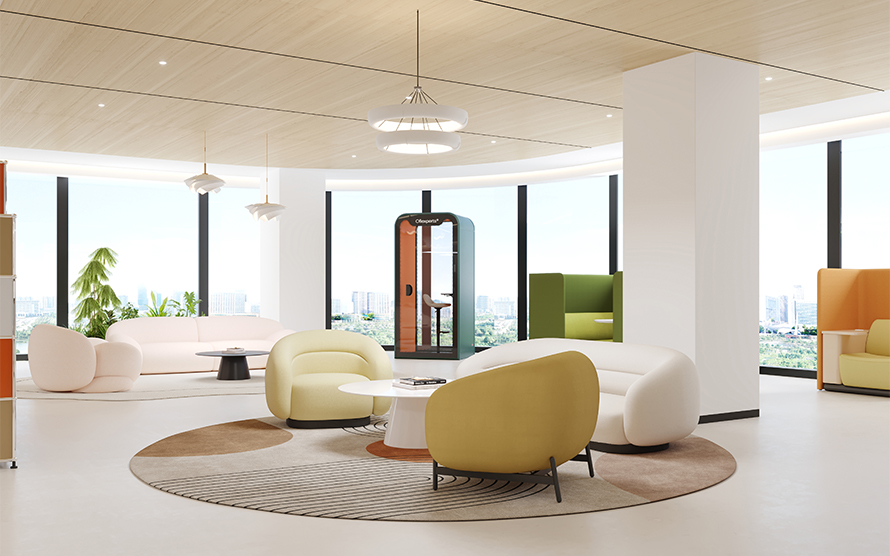
Achieving focus without isolation requires abandoning binary layout thinking (open versus closed) in favor of activity-based spatial ecosystems. High-performing workplaces rely on three interconnected design strategies:
Ultimately, focus and connection are not mutually exclusive—they are complementary drivers of cognitive performance. When workplace strategy combines acoustic gradation, flexible furniture boundaries, and immediate access to quiet enclaves, it empowers workers to dial their level of privacy up or down as their tasks demand. By designing for focus without isolation, organizations transform the office from a source of cognitive exhaustion into a dynamic ecosystem where individual output and collective culture elevate one another.

