

2026-11-06 Author:Ofiexperts
A company’s growth is often measured through revenue, market share, and workforce expansion. Yet another important factor deserves equal attention: whether its physical workspace can keep pace with its changing business needs. Office design is not simply about creating an attractive environment for today’s employees. It is about making thoughtful decisions that remain practical, adaptable, and cost-effective as an organization evolves.
Planning Beyond Current Needs
One of the most common challenges in office planning is designing exclusively for the company’s current size. A workspace that works well for 30 employees may become inefficient when the team grows to 60. More workstations, meeting areas, storage, and collaborative spaces will eventually be required. Without forward planning, businesses may face frequent renovations, additional furniture purchases, and unnecessary operational costs.
A more sustainable approach is to consider future possibilities from the beginning. This does not mean building an oversized office in anticipation of expansion. Instead, it means selecting layouts, furniture systems, and spatial configurations that can accommodate gradual changes without requiring a complete redesign.
Flexibility Is a Long-Term Investment
As companies expand, their working patterns and organizational structures often change. Teams become larger, departments develop new functions, and collaboration requirements become more complex. Consequently, office environments need to offer more than fixed arrangements.
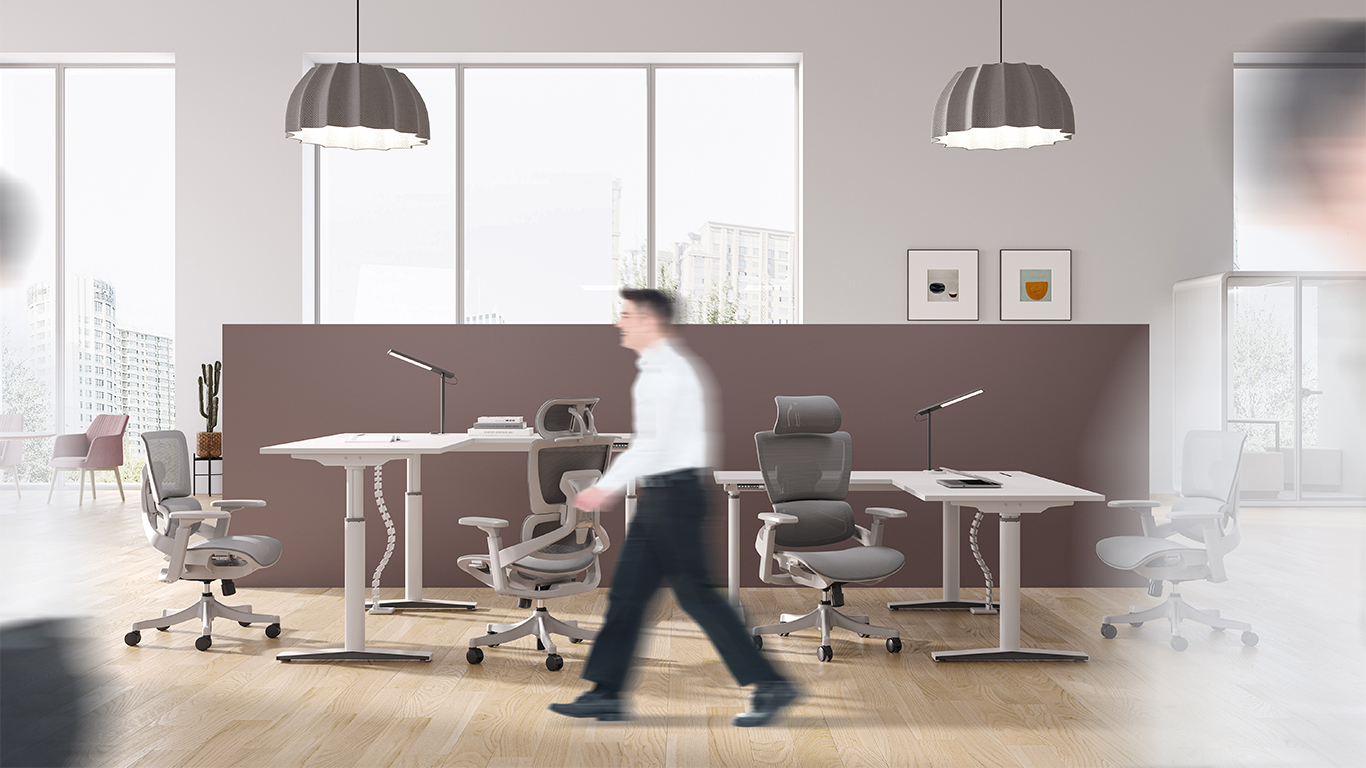
Modular workstations, movable partitions, reconfigurable meeting tables, and multi-purpose furniture allow businesses to adjust their spaces according to changing demands. Height-adjustable desks and ergonomic seating also support different working preferences while helping maintain a comfortable environment.
Flexibility is particularly valuable for growing companies because it reduces the need to replace entire furniture systems whenever their requirements change. A workspace that can be reorganized is often a more practical investment than one designed around a single configuration.
Designing for People, Not Just Headcount
Growth also brings changes in workplace culture. As teams become larger, maintaining communication, collaboration, and employee satisfaction becomes increasingly important. Office design should therefore balance individual productivity with opportunities for interaction.
Research reflects this shift. According to CBRE’s 2026 workplace benchmarking data, the proportion of office space allocated to individual work areas declined from 56% in 2021 to 35% in 2025, while shared support spaces increased by 35% over the same period. This suggests that businesses are placing greater emphasis on collaboration and shared experiences rather than simply adding more individual desks.
For growing organizations, this means considering a variety of workplace settings, including focused work areas, meeting rooms, informal discussion zones, and comfortable breakout spaces.
Balancing Initial Investment and Long-Term Value
Budget remains a key consideration in every office project. However, the lowest initial purchasing cost does not always represent the best long-term value. Furniture durability, maintenance requirements, adaptability, and replacement costs should all be part of the decision-making process.
Standardized furniture systems can simplify procurement and future expansion, while selected customized elements can help reflect a company’s identity and specific operational requirements. The objective is to find the right balance between consistency and flexibility.
Building a Workspace That Grows With the Business
Ultimately, successful office design is not defined by how impressive a workspace looks on the day it opens. Its real value lies in how effectively it supports the organization over time.
By considering future growth, investing in adaptable furniture, and placing employee experience at the center of planning, companies can create work environments that evolve alongside their ambitions. The best design decisions are not necessarily those that solve today’s problems alone, but those that continue delivering value as tomorrow’s needs emerge.

