

2026-05-06 Author:Ofiexperts
In the modern workplace, the most profound impacts on productivity often happen in the smallest moments. We tend to focus on the “big” events, the quarterly strategy session or the high-stakes pitch, but the reality of work is a continuous sequence of transitions: moving from a deep-focus task to a quick collaborative huddle, or shifting from a high-energy brainstorm to a moment of quiet rejuvenation.
Research suggests that the physical environment acts as the “silent partner” in these transitions. According to recent global workplace studies, employees who have control over their physical environment and can choose where and how they work report a 15% increase in individual performance and a 30% boost in engagement.
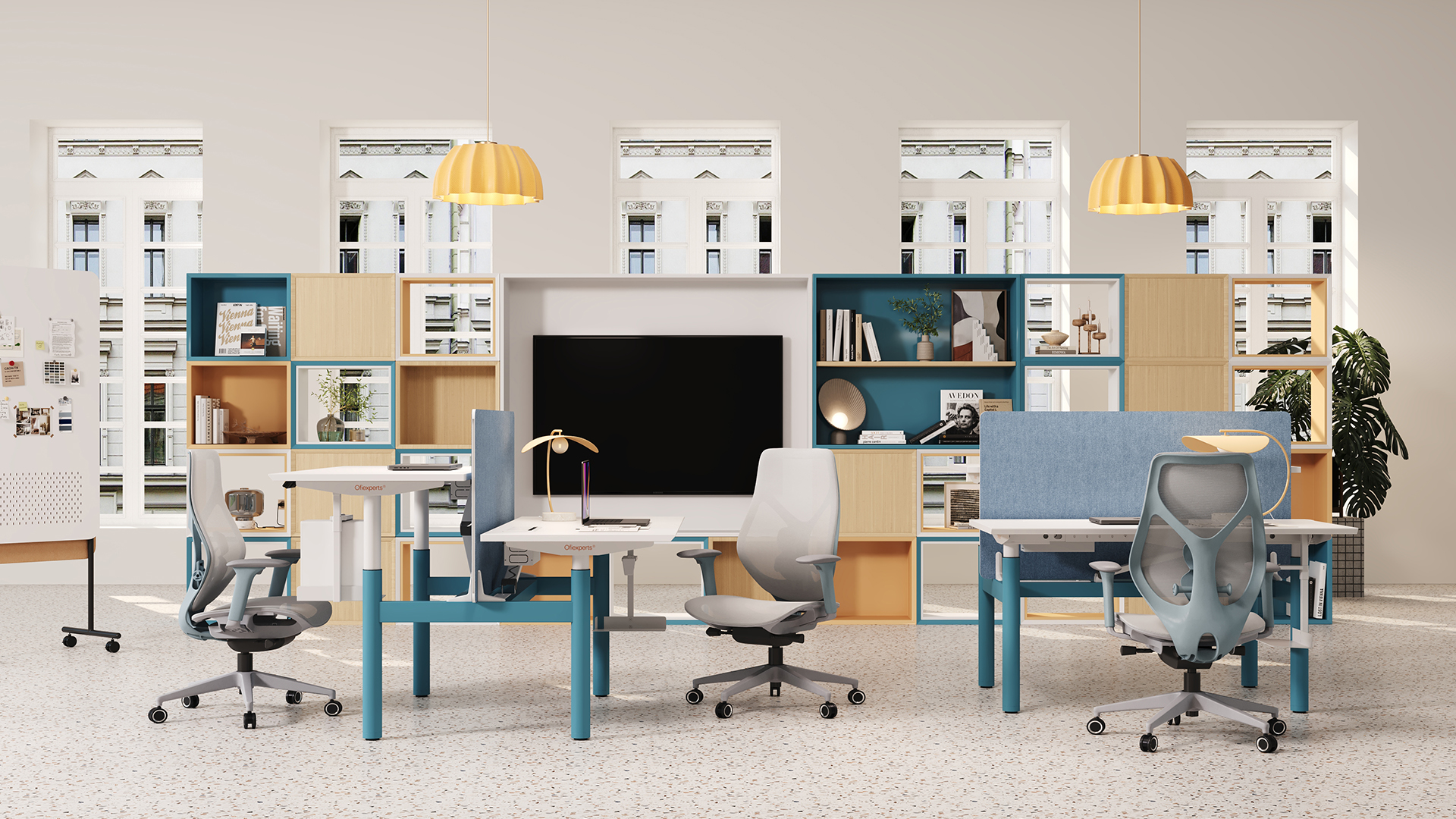
The Power of the Pivot
Most “work” doesn’t happen at a desk; it happens in the “in-between.” When furniture is designed to be intuitive rather than static, it removes the friction of transition. A height-adjustable desk isn’t just about ergonomics; it’s about a 3-second transition that signals a shift in mindset.
Data indicates that movement throughout the day is critical for cognitive function. When workers change postures, moving from sitting to standing or lounging, blood flow to the brain increases, helping to mitigate the “afternoon slump.” In fact, active workstations have been shown to improve focus and reduce sedentary behavior by up to 60 minutes per day.
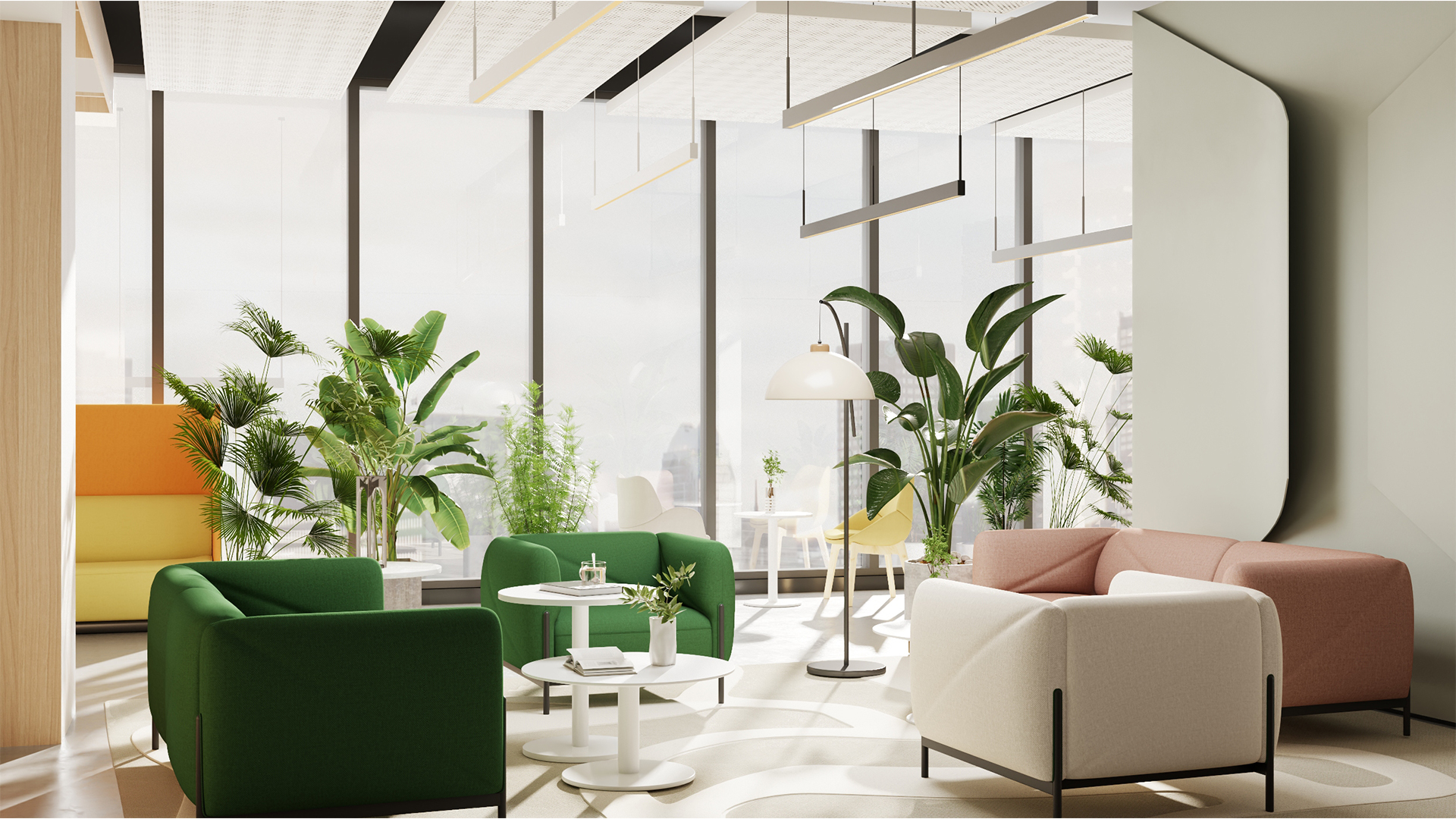
Shared Spaces and Social Capital
Collaboration is often spontaneous. The role of furniture in these moments is to provide “social magnets”, huddle rooms, modular sofas, and high-top tables that naturally draw people together.
Proximity matters: Studies in organizational psychology show that coworkers are four times more likely to collaborate if they sit within 50 feet of each other.
The “Lounge” Effect: Collaborative furniture that mimics a residential feel, often called “soft seating”, lowers social barriers. This psychological comfort leads to more authentic communication and faster problem-solving.
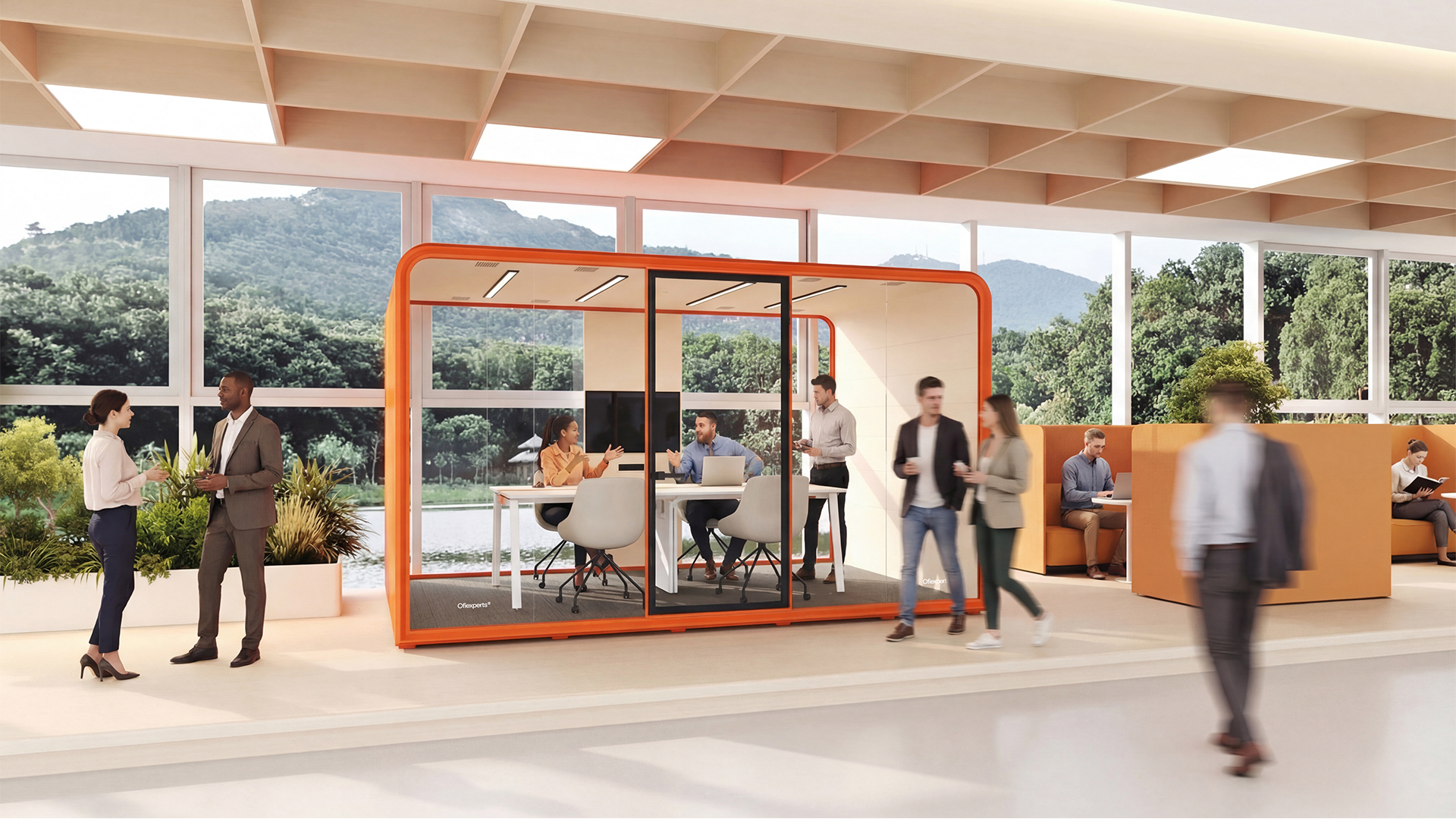
Designing for Cognitive Wellbeing
The most overlooked “moment” in the workday is the moment of rest. Cognitive fatigue is a measurable drain on the bottom line; a stressed brain is less creative and more prone to error. Furniture that supports privacy and acoustic comfort provides the “recharge” necessary for sustained performance.
Workplace acoustics are a primary pain point. Research shows that it can take up to 23 minutes to regain deep focus after a distraction. Acoustic pods and high-back seating aren’t luxuries; they are essential tools that shield the user’s “deep work” moments from the ambient noise of the open office.
Furniture is not a commodity; it is a catalyst for behavior. By designing spaces that mirror the natural rhythm of the human workday, the ebb and flow between social and solo, active and still, organizations do more than just fill a room. They create an ecosystem where the furniture works as hard as the people using it.
When we optimize the physical environment for every “everyday moment,” we don’t just change how people sit; we change how they think, feel, and perform.

